

个人简介
lol


推荐博文
学校2013
2026-08-26
分类: 悠长假期
学校2013
Warhammer 40,000 tie-in draws young donors, shows power of pop culture in public welfare_我的网站

一 |
Cosplayers in brightly colored power armor, carrying replica weapons, posed in front of displays featuring quotations and insignia from Warhammer 40,000, which is regarded as one of the world's best-known miniature wargames. Fans gathered around them for photos, creating the atmosphere of a franchise meet-up.
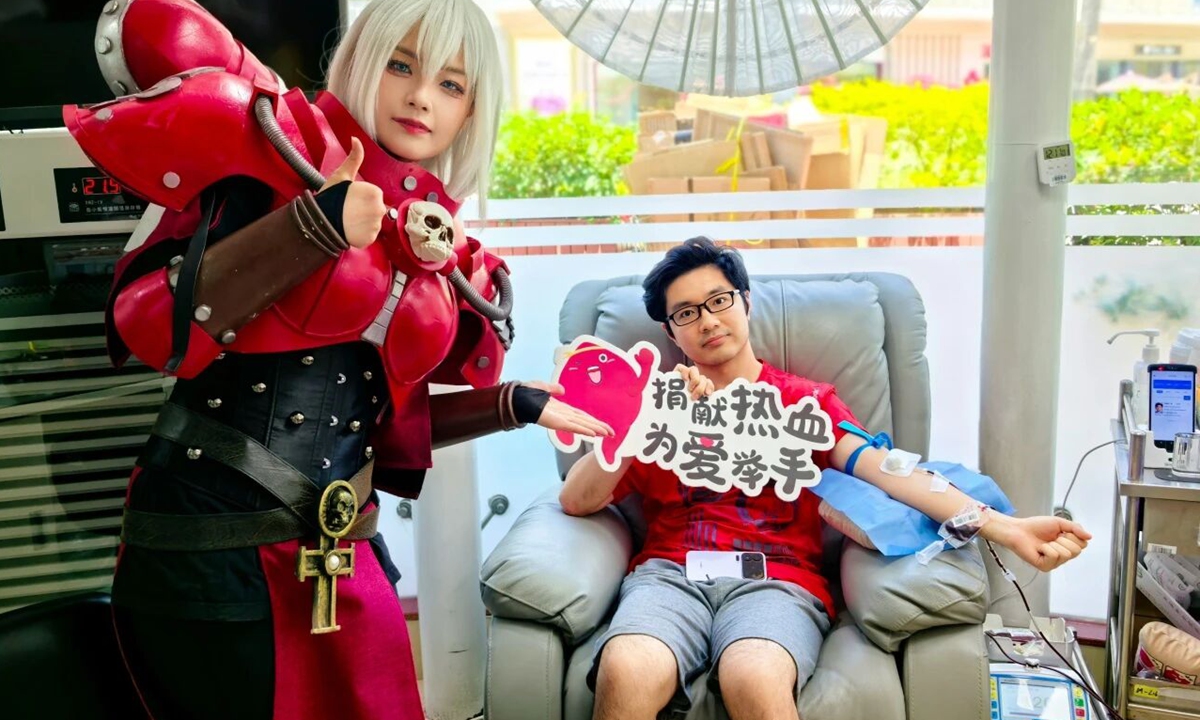
But the visitors had not come simply to meet fellow enthusiasts. Many had traveled from across China to roll up their sleeves and donate blood, drawn by the chance to take home a Warhammer-themed model.
The unlikely crossover reflects a broader effort by Chinese blood centers and public welfare organizations to reach young people in a language they recognize. By collaborating with popular international and domestic franchises, these organizations are making traditionally solemn causes more accessible - and, in this case, turning online enthusiasm into first-time blood donations.
Toys for life
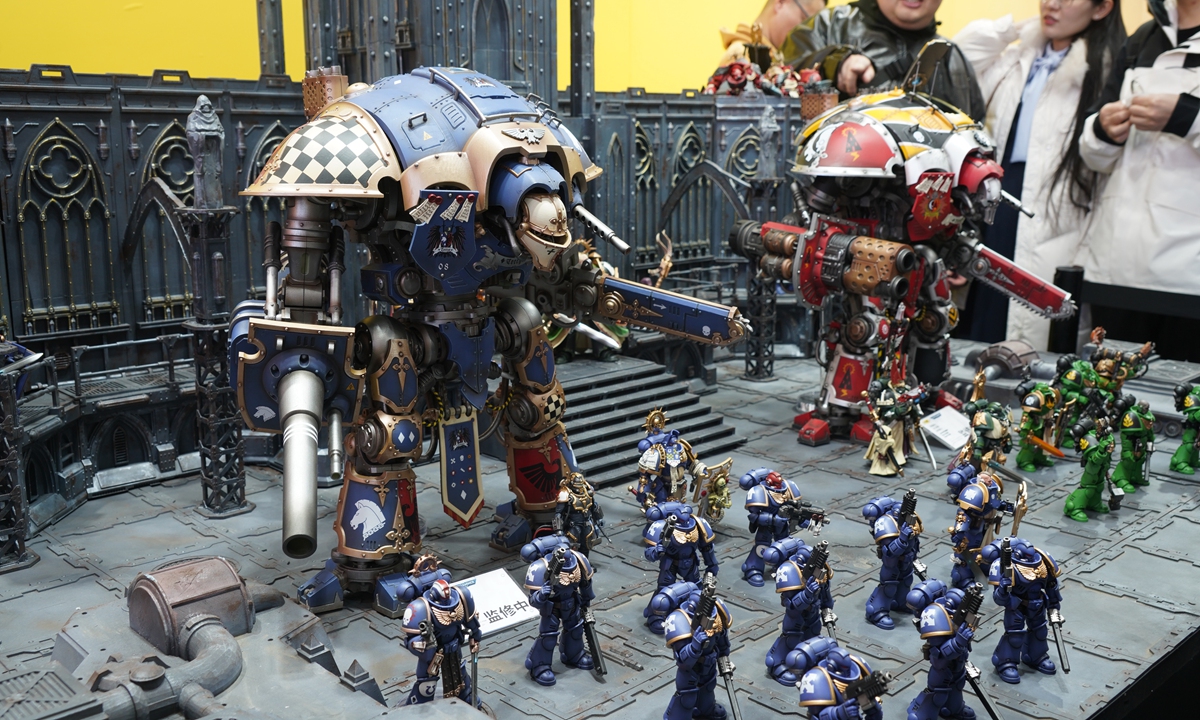
From July 24 to August 2, the Shanghai Blood Center held a campaign allowing people who donated whole blood at designated sites to enter a prize draw for Warhammer 40,000-themed figures and models.
The prizes ranged from giant 1:18-scale Knight Titans - towering war machines in the franchise's fictional universe - and Primarchs, its superhuman military leaders, to standard Space Marine figures.
At three designated blood donation sites, the combined number of donors reached 256 in a single day, said the center.
The response was particularly notable because Shanghai had experienced consecutive days of high temperatures, which reduced pedestrian traffic and affected street-based blood collection.
With some models distributed faster than expected, the center held another round of the campaign on August 8 and 9.
The campaign appears to have reached the audience it was designed to attract. Zhu, 25, who donated blood in Shanghai on August 1, told the Global Times that his interest in Warhammer was the main reason he joined the campaign.
"I had never donated blood before taking part in this event," Zhu said.
Zhu lives outside Shanghai, as did many participants he met at the site. Some had traveled from the neighboring provinces, while others came from even farther away, largely because of the Warhammer models.
"Close to half of the donors on site that day were giving blood for the first time, and they were also Warhammer fans," Zhu said.
The campaign was neither an isolated experiment nor the center's first attempt to use pop culture to engage potential donors. According to the Xinhua News Agency, the Shanghai Blood Center began exploring IP collaborations in 2014 and has more than a decade of experience in such campaigns.
Pop culture for public good
China's voluntary blood donation rate has reached 11.4 donors per 1,000 people, Gao Guangming, deputy head of the Department of Medical Emergency Response under the National Health Commission, said at a press conference in June 2025.
"Over the past two years, voluntary blood donations have declined globally due to multiple factors. In China, the accelerating aging of the population, changes in lifestyles, and overlapping challenges in publicity, organization and mobilization have left the imbalance between blood supply and demand relatively pronounced," Gao said.
"Clinical demand continues to rise, while seasonal, regional and blood-type-specific shortages persist," Gao said.
As people aged 35 and under constitute the majority of blood donors, attracting more young people is crucial to sustaining voluntary blood donation.
"Using designer toys and popular products can make blood donation more approachable, increase its visibility and recognition among young people, and help remove psychological barriers," Zhang Yiwu, a professor at Peking University with an expertise in cultural studies, told the Global Times on Wednesday.
Young people are highly active on social media and more willing to share their experiences, meaning their participation can encourage others to follow, Zhang said. Attracting younger generations is therefore essential to the long-term development of public welfare causes, he noted.
Blood donation is not the only field in which Chinese organizations are using popular franchises to broaden public participation.
In March, One Foundation again collaborated with Twinkle Twinkle, a popular character owned by Chinese toy company Pop Mart, to raise awareness of the needs of people requiring special support. Volunteers and children with autism took part in an art activity at Pop Mart City Park in Beijing.
The Pokémon franchise also appeared in a ByteDance public welfare campaign in 2025, which called for greater attention to the treatment and rehabilitation of children with cleft lips and palates, according to Chinese media reports.
Yet the campaign's success also raises a longer-term question: whether enthusiasm generated by prizes can be converted into regular voluntary donations.
"If there are more Warhammer-related charity campaigns in the future, fans will continue to follow them with enthusiasm, and I would also consider participating again," Zhu said. "However, without rewards or other incentives, the actual participation rate may not be very high."
A Shanghai Blood Center staff member acknowledged the same challenge. "A themed event can quickly increase the number of blood donors, but the long-term security of a city's blood supply ultimately depends on a stable community of voluntary donors," said the staff member, according to Xinhua.
The lasting value of an IP collaboration, therefore, lies not simply in the immediate increase in donor numbers, but in whether it gives first-time donors a positive reason to return.
"The real significance of IP collaborations is to give young people an opportunity to walk into a blood donation site," Xinhua noted. "Through standardized services and a positive experience, they can develop an understanding of and identification with voluntary blood donation, ultimately moving from 'one-time campaign participants' to 'long-term contributors to public welfare.'"
。 8月15日,在《中华人民共和国生态环境法典》施行首日,2026年全国生态日主场活动在内蒙古呼伦贝尔举办,主题为“厚植中国式现代化的绿色底色”。内蒙古自治区党委副书记、自治区人民政府主席包钢出席开幕式并致辞,国家发展改革委党组成员、副主任周海兵讲话。自然资源部党组成员、副部长周星,生态环境部党组成员、副部长,国家核安全局局长董保同出席。

二 | 中央宣传部、全国人大环资委、全国政协人口资源环境委、最高人民法院等26个部门,有关研究机构、行业协会、基层和国际组织代表参加活动。联合国助理秘书长、联合国秘书长气候行动和公正转型特别顾问塞尔温·哈特发表视频致辞。 2026年全国生态日主场活动由国家发展改革委会同有关部门和内蒙古自治区人民政府共同举办。主场活动上,国家发展改革委环资司解读循环经济相关政策,全国人大常委会法工委、最高人民检察院、共青团中央、工业和信息化部、自然资源部、生态环境部、水利部、国家林草局和内蒙古自治区发展改革委分别解读推进生态文明建设的相关法律政策,发布本领域或本地区生态文明建设成果,充分展现美丽中国建设成就。有关行业协会发布2026年全国生态日绿色低碳行动倡议,内蒙古呼伦贝尔市发布2026年全国生态日呼伦贝尔倡议,动员社会各方面践行绿色发展理念、携手共建美丽家园。

三 | 基层代表、地方代表、国际组织代表分别围绕生态文明建设基层故事、生态文明建设经验、中国生态文明建设和绿色发展理念的国际意义等主题进行交流分享。主场活动还设置生态文明建设成效和生态产品推介展示专区,集中展示各地区生态文明建设经验做法和成效,推介展示各地区代表性生态产品。 当天,各地围绕活动主题,开展具有地方特色的全国生态日活动,宣传阐释习近平生态文明思想,学习贯彻生态环境法典,加强生态文明宣传教育,普及推广绿色低碳生活方式,推动形成全社会崇尚生态文明的良好风尚。
Current article:http://ihf5.menjiewugaokuodudipianbeiduan.pics/wwuic5/20260826/4257.html
Published on:16:34:13
相关热门文章
- 抖音悠悠女装店铺拒绝售后
- Kamal Haasan's Production House Honours Rajinikanth With A Nostalgic Video
- 亚洲杯中国男排轻取巴基斯坦男排
- 海牛副总经理冯文静:我不认输,我也不会放弃我的血性
- Jason Kelce 联手 Liquid Death:想用你的尿液为 AI 数据中心降温
- 金价暴涨,老庙黄金“玩不起”?订单拦截、拒发货引众怒
- 台民调乱象丛生尽显政治算计_参选人_公司
- SC Justice Brett Kavanaugh Flees Through Steakhouse Backdoor to Avoid Protesters
- 7月中国核发绿证3.06亿个,7月中国核发绿证3.06亿个
- Weather Update: दिल्ली-NCR में अभी नहीं थमेगी बारिश, कैसा रहेगा यूपी-बिहार समेत बाकी राज्यों का हाल?
- 男子买4600台手机刷好评4个月赚300万 法院判了!
- 韩先楚回老家见公社干部几十人,直接给毛主席写信:必须精简,历史看兴衰,原创 韩先楚回老家见公社干部几十人,直接给毛主席写信:必须精简
- 绥芬河出境海参崴,靠谱旅行社咋挑?避坑三式辨真章,看完再定不心慌
- किसान कृषि अनुदान पाने के लिए 30 सितंबर तक करें फटाफट आवेदन, पर यहां पर रजिस्ट्रेशन होना जरूरी
- 台湾前“深绿”媒体人彭文正表态:不惜代价推动两岸和平统一


